
Loading...
Serving Nacogdoches, TX and surrounding areas. (936) 305-0269
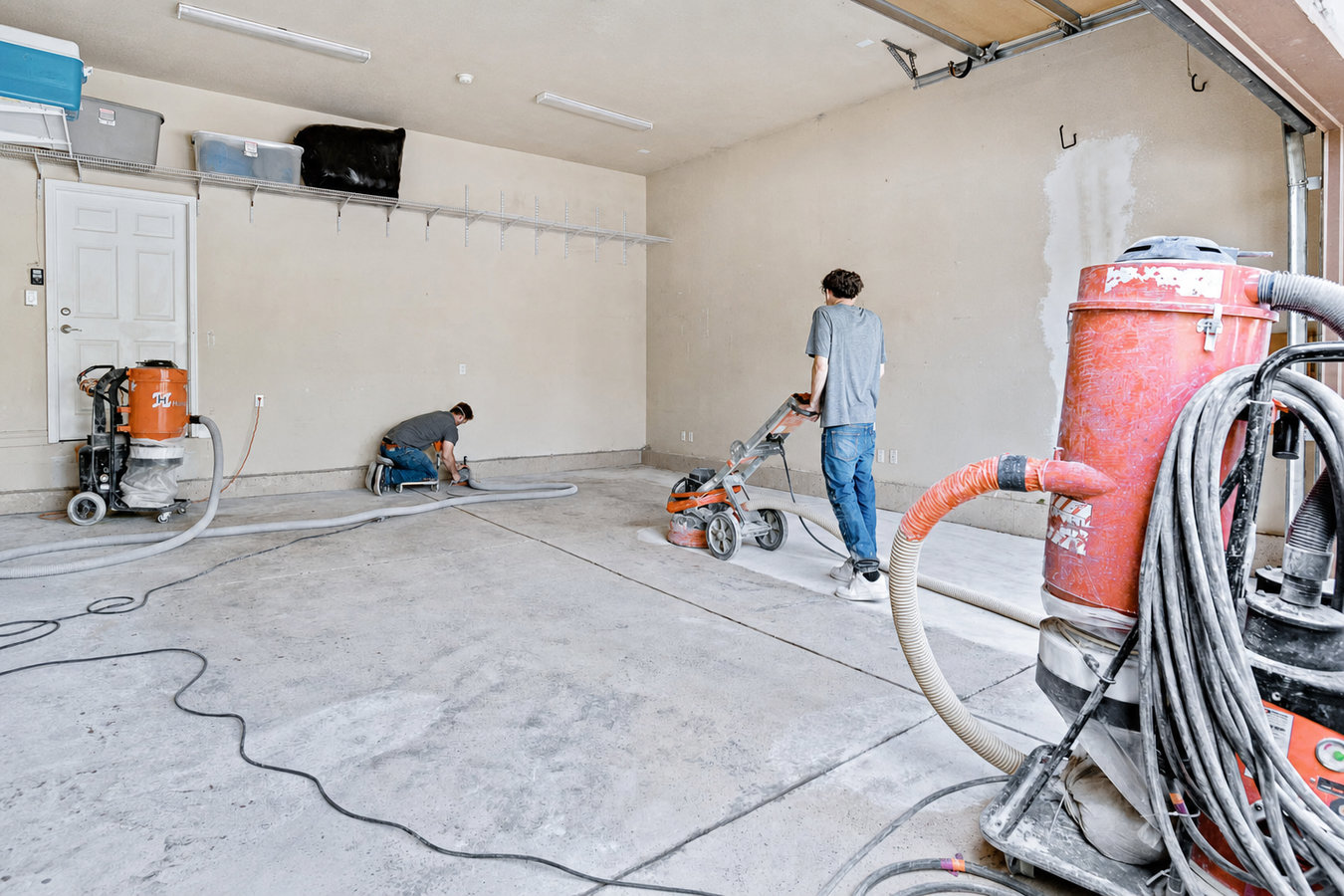
Your old concrete floor needs to come out before the renovation can move forward. We break it up, haul it away, and leave the subgrade ready for whatever comes next - without tearing through your home to do it.
Concrete floor stripping and removal in Nacogdoches means physically breaking up an existing slab - using jackhammers, floor saws, or grinding equipment - and hauling the broken material away so the space is clear and ready for the next step. Most single-room or garage removals take one to two days for a standard crew, with larger areas or thicker slabs taking three to four days.
It is most often needed when a slab is too damaged or uneven to resurface, when a renovation requires access to plumbing or electrical below the floor, or when repeated patching has stopped working. Nacogdoches homes on clay-heavy soil often reach this point because years of soil movement eventually push a slab beyond what repairs can fix. Before any new floor system goes in, the exposed subgrade needs to be assessed and properly prepared - especially in East Texas, where moisture and soil movement are facts of life. When the slab only needs surface-level correction, our concrete grinding and surface preparation service is often the right starting point instead.
The job is loud and dusty, but a careful crew keeps the mess contained so the rest of your home stays livable while the work is happening. Knowing what to expect from start to finish makes the process much less stressful.
If you have patched the same crack two or three times and it reopens every season, the slab itself has shifted or settled beyond what surface repairs can fix. In Nacogdoches, this is common because the clay-heavy soil expands and contracts with wet and dry cycles, pushing the slab up and letting it drop repeatedly. At that point, patching is just delaying the inevitable - full removal and a fresh start is the more cost-effective path.
Knock on your concrete floor in different spots with your knuckle. If some areas sound hollow or feel slightly springy underfoot, the slab has likely separated from the soil beneath it - a condition called delamination. East Texas's wet summers and dry winters accelerate this process, and a delaminated slab cannot be reliably resurfaced or coated without addressing the void underneath.
If your remodel involves moving a drain line, adding a bathroom, or running new conduit beneath the slab, the concrete has to come up first. This is one of the most common reasons homeowners in Nacogdoches schedule floor stripping - not because the slab is failing, but because the renovation plan requires access to what is underneath it.
Nacogdoches gets significant rainfall, and older homes without proper moisture barriers under the slab can develop chronic dampness that seeps up through the concrete. If you notice dark staining, a chalky white residue on the surface, or a persistent musty smell in a room with a concrete floor, moisture is likely migrating up through the slab - and in many cases, removal and replacement with a proper moisture barrier is the only lasting fix.
We handle residential and light commercial floor removal across Nacogdoches and surrounding East Texas communities. Before breaking a single piece of concrete, we confirm the location of underground utilities - water pipes, electrical conduit, and drain lines. Texas law requires calling 811 to have buried lines marked before any demolition that could disturb them, and that is a step we take on every job without exception. You can verify the requirement and track your locate request at texas811.org.
After removal, we walk you through the condition of what was found underneath - the soil, any moisture issues, and what the subgrade needs before new concrete or flooring goes in. Removal is the first step in a larger process, and what happens to the subgrade afterward determines whether the new floor lasts. For homeowners who need surface-level correction without full removal, our epoxy floor coatings or concrete grinding and surface preparation services may be a better fit.
For homeowners who need a room or garage floor completely removed - we break the slab into sections, load it out, and leave a clean subgrade ready for assessment.
When only a portion of the floor needs to come out - for access to plumbing, a localized failure, or a specific area of the renovation - we remove just what is needed without disturbing the rest.
Broken concrete is heavy and has to go somewhere - we include debris removal and haul-away in our quote so there are no surprise charges at the end of the job.
Before we pack up, we walk you through what the soil or gravel base looks like underneath - whether it is stable, whether moisture is present, and what needs to happen before new concrete can be poured.
Nacogdoches is one of the oldest towns in Texas, and a significant portion of the housing stock near the historic downtown and around Stephen F. Austin State University was built in the mid-20th century or earlier. Slabs in these homes were often poured thinner and without the reinforcing steel that newer construction uses. That combination - thin, unreinforced concrete on top of expansive clay soil that has been moving for decades - is why so many floors in this area eventually reach the point where removal makes more sense than repair. On the positive side, thinner older slabs break up faster and cost less in labor than newer, heavier slabs. The trade-off is that the subgrade work after removal is often more involved because the soil has been shifting for longer.
Nacogdoches also averages over 50 inches of rain per year, and summer humidity regularly sits above 80 percent. That moisture works its way under slabs in older homes and accelerates delamination and subgrade softening. When the concrete comes out, giving the exposed soil adequate drying time before any new pour is especially important here. We serve homeowners throughout this part of East Texas, including in Nacogdoches and in surrounding areas like Lufkin, TX, where the same soil and climate conditions shape what good removal work looks like.
We ask about the size of the area, what the floor is currently used for, and whether you know of any pipes or wires running under the slab. From there we schedule an in-person visit - no honest contractor can give you a real price without seeing the space. We reply to new inquiries within 1 business day.
We walk the floor, check for cracks and soft spots, and look at how the room is accessed - doorways and tight corners affect how equipment gets in and debris gets out. You get a written estimate that breaks out labor, equipment, and disposal costs so there are no surprises at the end.
The crew uses jackhammers, floor saws, or grinding equipment to break the slab into sections and load the pieces out. Expect significant noise for most of the workday. We set up plastic sheeting and dust barriers so the rest of your home stays as clean as possible. Most residential removals are completed in one to two days.
Once the concrete is out, we clean up the debris and walk you through the exposed soil or gravel base underneath. We tell you what we found - whether the subgrade is stable, whether moisture is present, and what needs to happen before any new floor system goes in. You leave with a clear picture of the next step.
We give you a written, itemized estimate before any work begins - so you know exactly what you are paying for.
(936) 305-0269Texas law requires contractors to notify 811 before any digging or demolition that could disturb buried lines. We do this on every job, no exceptions. Hitting a hidden water pipe or electrical conduit is one of the most costly mistakes in floor removal - and it is entirely preventable. OSHA also sets standards for dust control during concrete demolition, which you can review at osha.gov.
When the slab comes up, the clay soil underneath is exposed to moisture and drying cycles that can shift it further. We assess the subgrade condition after every removal and tell you honestly what needs to happen before new concrete goes down - because a new slab poured on an unstable base will crack just like the old one.
Broken concrete is heavy and has to go somewhere. We include debris haul-away and disposal in every written quote so you do not end up with a pile of broken concrete in your driveway and a surprise line item on the final bill.
Many homes near the historic downtown and around the SFA campus were built in the mid-20th century - and older construction requires a more careful approach. Thinner walls, older plumbing, and pier-and-beam sections adjacent to slab areas mean a crew that moves fast without looking around first can cause real damage. We adjust our approach based on what we find during the estimate visit.
Concrete removal is not a glamorous job, but doing it carefully - checking for utilities, managing the dust, assessing the subgrade honestly - is what determines whether your renovation starts on solid footing. That is the standard we hold every job to.
Once the old slab is out and new concrete is down, epoxy coatings give your floor a durable, attractive finish that stands up to heavy use.
Learn MoreWhen your floor only needs surface-level correction rather than full removal, grinding and prep brings it back to a clean, flat starting point.
Learn MoreSpring renovation season fills up fast - call now to lock in your date and get your project moving on the right timeline.